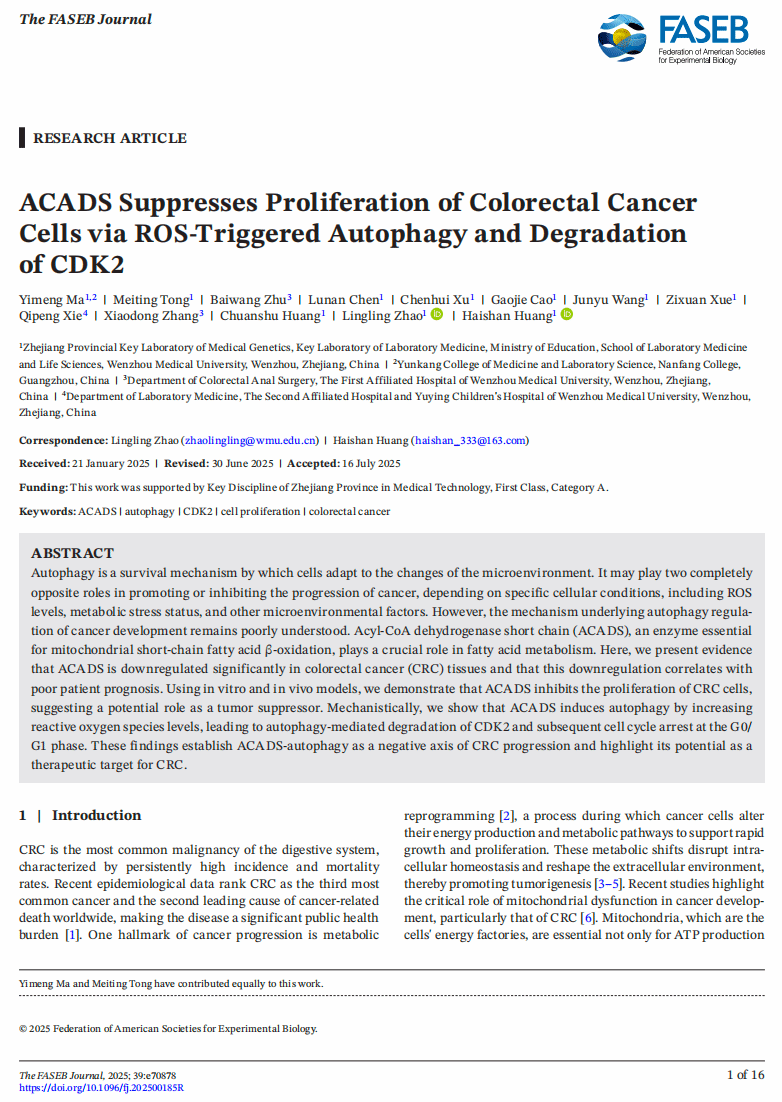
马艺萌老师在刊物《The FASEB Journal》(JCR分区:Q2,IF=4.2)发表“ACADS Suppresses Proliferation of Colorectal Cancer Cells via ROS-Triggered Autophagy and Degradation of CDK2”论文。
ABSTRACT
Autophagy is a survival mechanism by which cells adapt to the changes of the microenvironment. It may play two completely opposite roles in promoting or inhibiting the progression of cancer, depending on specific cellular conditions, including ROS levels, metabolic stress status, and other microenvironmental factors. However, the mechanism underlying autophagy regulation of cancer development remains poorly understood. Acyl-CoA dehydrogenase short chain (ACADS), an enzyme essential for mitochondrial short-chain fatty acid §-oxidation, plays a crucial role in fatty acid metabolism. Here, we present evidence that ACADS is downregulated significantly in colorectal cancer (CRC) tissues and that this downregulation correlates with poor patient prognosis. Using in vitro and in vivo models, we demonstrate that ACADS inhibits the proliferation of CRC cells, suggesting a potential role as a tumor suppressor. Mechanistically, we show that ACADS induces autophagy by increasing reactive oxygen species levels, leading to autophagy-mediated degradation of CDK2 and subsequent cell cycle arrest at the GO/ G1 phase. These findings establish ACADS-autophagy as a negative axis of CRC progression and highlight its potential as a therapeutic target for CRC.